

The Silew-silew
 By Rex Catubig
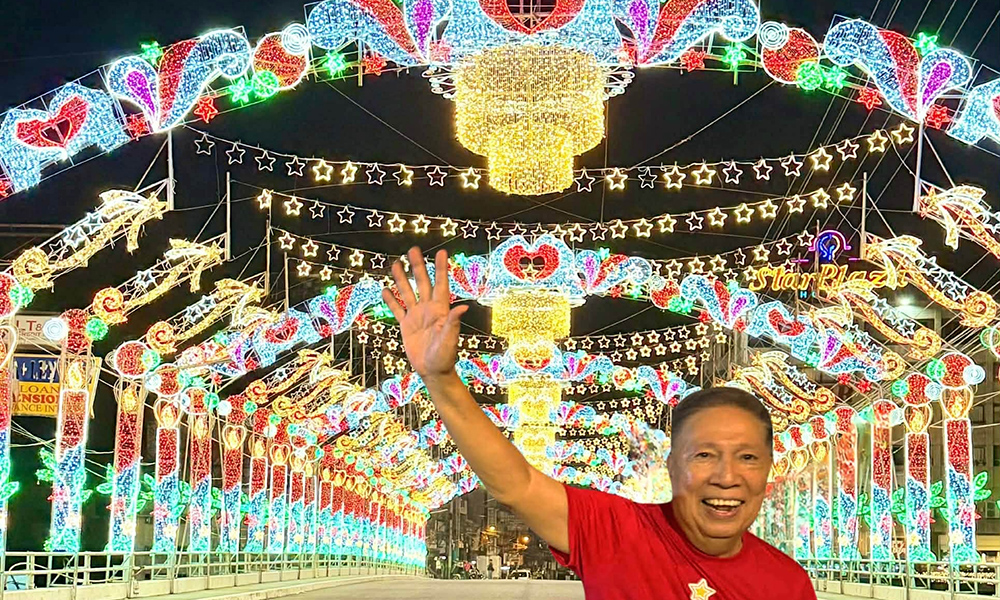
NOTE: The yearly Christmas lighting of the Quintos bridge has always bedazzled the holiday crowd. Yet just as fascinating are the stories behind the dazzle of Quintos and the other bridges in the city as well. Hopefully, the bridge lights shall cast some brilliance on these footnotes.
I’ve always been enamored with bridges. My generation was awestruck by the movie about the Bridge on The River Kwai, and we stomped in soldierly cadence as we whistled its melodic martial music. But my forever love is the romantic Golden Gate Bridge that straddles the strait between San Francisco and Sausalito. It is the reason I left my heart there. Though I have fond memories of other iconic bridges, too.
Before taller buildings partly hid it from view from any of the balconies of the Hilton San Francisco on Union Square, the Oakland Bay Bridge was a stunning sight to behold, especially in the wee hours of a full moon. Then, farther north, the magnificent Carquinez Bridge is a breathtaking surprise as you descend from the hilltop road that leads to it. Up in the East, in New York, there is the cinematic Brooklyn Bridge that has been immortalized in films and dramatized the fleeing of a frightened public, following the terrorist attack of 9/11.
Great cities have always sprung from bays and riverbanks. And from these cradles of culture and history, emerged the phenomenon of bridges that, aside from their utilitarian purpose as conveyances, are symbolic of man’s need to reach out, extend beyond his range, and connect across a barrier.
The colorful, glittery lights of the Quintos and Magsaysay Bridges that span the river running parallel to downtown and bisecting the east and west of the city, are holiday-inspired in keeping with Christmas tradition. But unwittingly, it is a befitting celebratory gesture that pays homage to the historical imprints these structures bear.
The Quintos Bridge derives its historical importance from its location. At its foot was the Spanish outpost where the last of the Spanish contingent in the province succumbed to ultimate defeat at the hands of the local revolutionaries.
For its part, the Magsaysay Bridge on Perez Boulevard memorializes the 1990 earthquake that devastated Dagupan yet proved its strength and resilience. The picture showing its span as if halved by a karate chop is an indelible iconic image of a city broken, yet presaged its rise from the debris of destruction.
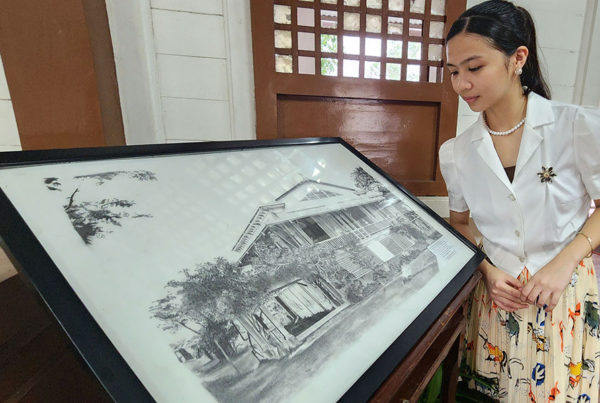
This calls to mind the unheralded Franklin Bridge at the western riverbank of the city. Aside from being the gateway to the western towns of Pangasinan, it was the lifeline to the pioneer Colegio de San Alberto Magno in Barrio Calmay that established Dagupan as an educational center. Erected in 1891 by the Dominican Order, the elite school had the distinction of being the alma mater of scions of prominent families who later distinguished themselves as local civic and political leaders. But this engineering marvel, which featured a drawbridge in the center that opened to allow the entry of tall sailboats, did not stand the ravaging current of the 1935 floods.
Not to be disregarded is the Dawel Bridge, which was bombed by the Japanese during the war, and precluded the initial attempt of Gen Douglas MacArthur to drive into the town proper, but was temporarily replaced with planks to allow the General access to the heart of the township where he established his headquarters for the Liberation of Luzon.
All these considered, it behooves the city to do a double-take and take a hard look at these bridges of history and imbue them with greater significance beyond the gaudy, glittery lights. In the interest of cultural heritage revitalization, the city must embark on bestowing upon these iconic bridges their signal mark of honor. They must be rejuvenated not solely for decorative value but for their cultural significance in the city’s colorful history. The holiday makeover should not be designed solely to attract the festive crowd, but it must draw the curiosity of the public to see their intrinsic sparkle.
While it is commendable to embellish the bridges to inspire and spread holiday cheer, they must also serve a more profound reason—to bridge the past into the present, revalidate their legacy, and reacquaint our people with what comprises the foundation and link to our being as Dagupeños.
It’s a long way to go, but the bridges provide the passage to arrive at where we started.