

Too premature to quarrel over nuclear power
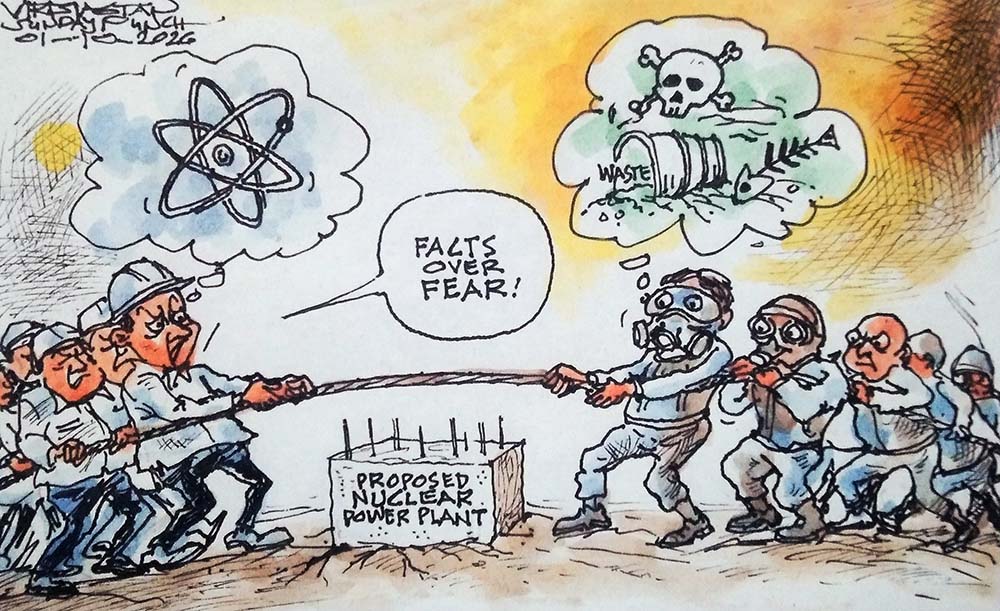
THE debate over the proposed construction of a nuclear power plant in Labrador has quickly divided public opinion, almost evenly, into those who welcome the idea and those who oppose it. Supporters look ahead with optimism, imagining cheaper—perhaps even free—electricity and the promise of jobs once construction begins. Opponents, on the other hand, fear the long shadow cast by nuclear energy: health risks, environmental damage, and radioactive waste that will remain hazardous for centuries.
Yet for all the passion stirred by this issue, the quarrel itself appears premature.
At the heart of the matter is a misconception: that a nuclear power plant can be built simply because a local official, a district congressman, or even a governor wishes it so. This is far from reality. Nuclear energy is not a local undertaking. It is a national policy decision that requires the imprimatur of the highest levels of government and, ultimately, the consent of the entire nation. No nuclear facility can rise without an explicit decision by the national leadership to go nuclear, backed by enabling laws, regulatory frameworks, and international safeguards.
A nuclear power plant costs billions—billions of pesos to build, operate, secure, and eventually decommission. Where would this money come from? Would the government once again resort to massive foreign loans, as it did decades ago with the Bataan Nuclear Power Plant? That project, constructed at enormous cost, was ultimately abandoned and never produced a single watt of electricity. The memory of that costly lesson still lingers, raising legitimate concerns about debt, accountability, and long-term economic burden.
Another question is: Do we currently have enough trained Filipino experts capable of safely operating and regulating a nuclear power facility? The honest answer is no—not yet. Nuclear energy requires a deep pool of engineers, scientists, regulators, and emergency-response specialists, all trained to international standards. Developing such expertise is not a matter of months, but of many years, if not decades.
Some argue that a build-operate-transfer scheme could solve these problems by placing responsibility in private or foreign hands. But even this option is far from simple. Such arrangements must be approved by the National Economic and Development Authority (NEDA), the Board of Investments (BOI), and other relevant regulatory bodies. No individual or local authority can negotiate such deals on their own.
Nuclear power plants cannot be built at the drop of a hat. They are the product of painstaking feasibility studies, environmental assessments, safety analyses, public consultations, and international reviews—processes that typically take many years. Even PhilAtom, the nuclear energy agency created only last year, cannot carry this burden alone, assuming it were already fully constituted and operational—which it is not.
For now, it may be wise to sit down, take a breath, and temper our anxieties. The question of nuclear power is too serious to be settled by fear or false hope—and certainly too complex to justify quarrels over something that remains, at best, a distant possibility.