

Casa Real restoration begins
LINGAYEN— The first phase of the restoration of Casa Real has started and the project is expected to be completed by the first semester next year.
The Provincial Engineering Office (PEO) has begun the necessary perimeter fencing and soil testing and soon after the Department of Public Works takes over for the second phase. The Tourism Infrastructure and Enterprise Zone Authority (TIEZA) will undertake Phase 3.
According to Malou Elduayan, head of the Provincial Tourism and Cultural Affairs Office, all phases of the project will be supervised and monitored by the National Historical Commission of the Philippines.
The Casa Real restoration project secured a total allocation of P85 million, P80 million from the Department of Tourism (DOT) through the TIEZA and P5 million from the provincial government.
Second District Representative Leopoldo Bataoil, one of the prime movers of the project, said the TIEZA has approved a P50 million budget, in addition to the initial P35 million allocation.

Once completed, Casa Real will be home for the provincial museum that will provide interactive experience on the province’s history.
It will house old books, documents, artifacts, archeological relics, and other materials of historical and cultural value of Pangasinan.
Department of Tourism (DOT) Region 1 Director Manuel Valera said the restoration would primarily promote “pride of place” among the community members.
“You should take care of your heritage… you should have this context of old, historical structures where people can relate to,” he said.
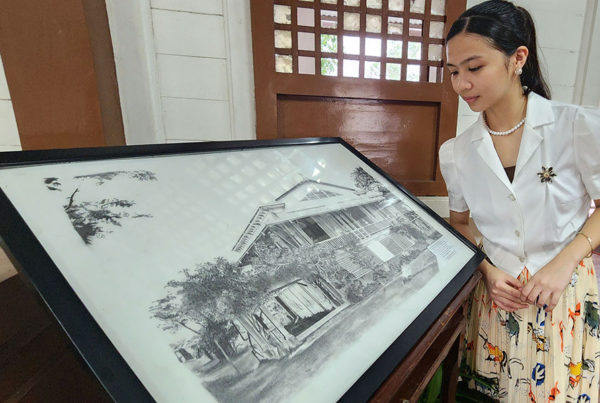
The two-story edifice, located in the capital town, beside the Municipal Hall and Provincial Jail, is a Spanish-era building that served as the Provincial Capitol until the present Capitol Building located in the Lingayen beachfront was constructed in 1918. It has also served as the sala of the judicial courts, as a public elementary school, and as municipal government offices before its total wreck.
Constructed in the 1840s, Casa Real has been an active witness of provincial and national history, providing shelter, at one time or the other, to locals, Spanish, and American fighters and other personalities. It has become the station of Spanish soldiers and their native recruits who helped fought the Katipuneros during the revolutionary war against the Spanish rule. Moreover, upon the organization of Pangasinan as a civil province in 1901 by the Taft Commission, the royal house has provided a grand reception to Judge William Howard Taft and his commissioners.
On March 13, 2012, Casa Real was declared a National Historical Landmark by the National Historical Institute for its historical significance as well as architectural importance as an “outstanding and unique example of civic architecture from the Spanish and American colonial periods.” (Johanne Macob)